
In 1998, when the world was excited about the first mobile phones with colour screens, scientists from European universities were working on something else. Their goal was not to make a smaller phone, but to create circuits that could bend, roll, or be attached to fabric. Today, after over 20 years of research, flexible electronics are no longer just science experiments. They are becoming a key part of wearable, medical, and interactive products.
What are flexible printed circuits (FPC)?
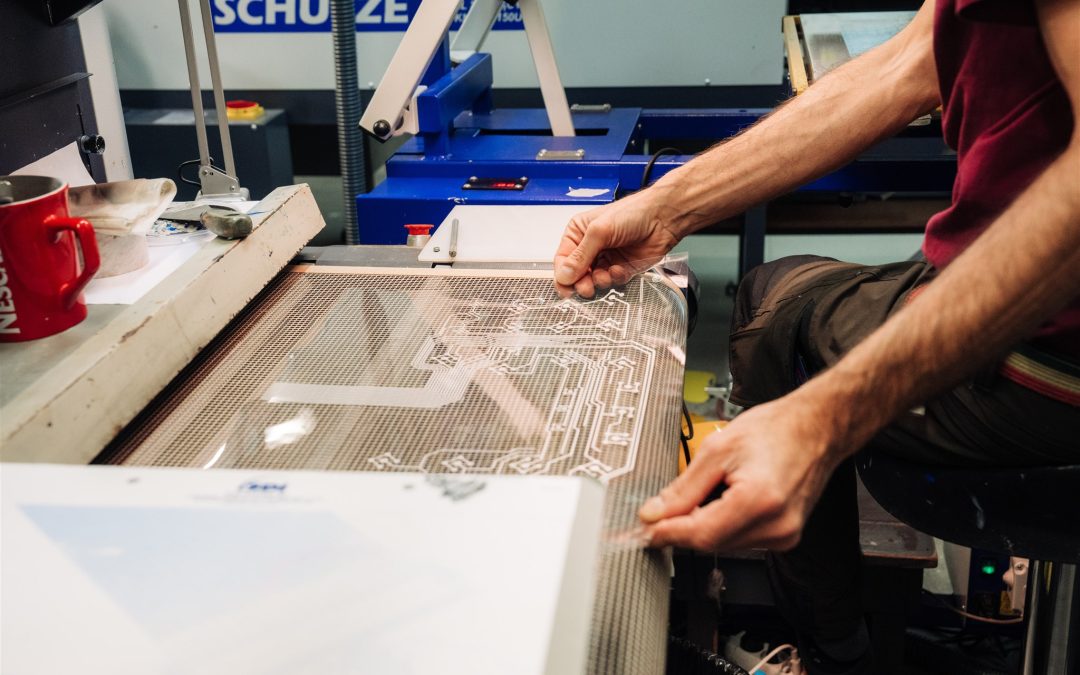
FPCs are thin, light electronic structures made on flexible materials like polyester (PET), polyimide (PI), TPU, or PC film. Instead of milling or etching like in classic PCBs, conductive paths are printed using screen, inkjet, or flexographic printing. Conductive materials include silver inks, graphite, carbon, and conductive polymers.
Benefits:
- Flexible and fits the body or clothes
- Reduces size and weight of the system
- Can be built into packages, clothes, or PET film
- Easier to assemble, fewer parts needed
- Lower cost for small series and prototyping
- Better shock and vibration resistance in mobile use
Applications in Wearables:
- Monitoring health (ECG, EMG, temperature, skin moisture)
- Sports clothing with training sensors
- Smart bracelets, necklaces, rings (e.g., pulse rings)
- Single-use medical devices
- Textiles that react to touch or movement
- Clothes with NFC and RFID for ID and tracking
Difference from traditional PCBs:
Classic PCBs are stiff and made for fixed housings. They’re not good for wearing or sewing into clothes. FPCs can bend, be sewn, or glued into fabric. This gives a big advantage in comfort, design, and looks. But it also needs different design methods, strong flexible materials, and good planning for bending stress.
Rising Demand:
In rich countries, people wear 3 to 7 electronic devices daily—phones, watches, glasses, sports bands, headphones. Smart clothes, shoe insoles, diagnostic patches, and sleep rings are more common. By 2030, the wearable tech market may reach $160 billion.
Technical Info and Parts:
- Henkel LOCTITE® EDAG PF 410: Silver paste, conductivity > 10⁵ S/cm
- ELANTAS Bectron® CP 6662: Silver paste, resistance < 0.010 Ω/sq/mil
- Heraeus Prexonics®: Nano-metallic ink, 150 nm–5 µm, 20–50% silver conductivity
- Tacterion Plyon® Flex Sensor: Flexible sensor, bending radius <10 mm, fast response < 5 ms
Design Challenges:
- Joining with fabric without changing comfort
- Resistant to bending, washing, water, and chemicals
- Accurate sensors for touch, temperature, and pressure
- Must work with BLE, NFC, LoRa
- Materials must handle UV and -20°C to +85°C
Fun Tech Facts:
- Roll-to-roll printing goes up to 50 m/min on 50–100 µm PET
- PrintoCent in Oulu tests flexible parts in real environments
- Henkel has 40+ types of inks and pastes for printed electronics
Case Study:
For Polyend, a musical instrument maker, LC Elektronik created pressure-sensitive mats using Henkel’s LOCTITE® ECI 7004HR carbon ink. It sticks well to PET and has stable resistance. Specs: 21.4% solids, density 1.09 g/cm³, viscosity 10,250 mPa·s, surface resistance 3500 Ω/□/mil. The sensors were printed and added to soft silicone mats. The final product was flexible and had reliable signals, perfect for musical controllers.
Looking Ahead:
FPCs will be a key part of new wearable devices. Materials are getting thinner and better. Companies like Tacterion make sensors that bend a lot and still work. Automotive, medical, and fitness sectors show more interest every year.
Summary:
Back in 1998, few believed bendable circuits would end up in shirts, bandages, and rings. But today, when we need more ergonomic and smart tech, flexible electronics are no longer just the future—they are already here.